


PSAU Procurement, Investments, GHG Policies and Reports on SDG Measurements
PSAU Ethical and Sustainable Procurement Framework
Purpose
1. PSAU is committed to integrating sustainability as a foundational principle in all procurement activities.
2. Procurement decisions shall prioritise minimising adverse social, environmental, and economic impacts across the lifecycle of goods and services, from production to disposal.
3. The university will provide guidance, resources, and frameworks to embed sustainable practices in purchasing decisions, including ongoing consumables, capital assets, infrastructure projects, and hazardous materials (e.g., mercury-containing lighting).
Core Principles
Stewardship: Align procurement with PSAU's sustainability objectives, fostering environmental conservation, economic efficiency, and community welfare.
Prioritisation: Sustainability criteria shall govern purchasing choices, balancing cost-effectiveness with ethical and ecological considerations.
Resource Efficiency:
• Prioritise reusing, repurposing, or borrowing items before purchasing new.
• New acquisitions are permitted only if:
o Existing items are irreparable, unsafe, obsolete, or environmentally inefficient.
o All feasible options for sharing, leasing, or sourcing second-hand alternatives are exhausted.
Market Influence: Leverage procurement to drive demand for sustainable products, supporting suppliers committed to reducing greenhouse gas emissions, toxic substances, and waste.
Risk Management: Conduct lifecycle assessments and sustainability risk evaluations for all procurements to ensure compliance with environmental policies.
Zero-Waste Ambition: Reduce consumption and transition to low-impact products to achieve waste minimisation targets.
Continuous Improvement: Regularly refine procurement practices, serving as a model for suppliers and stakeholders.
Ethical Standards: Favour suppliers adhering to circular economy principles, responsible disposal practices, and ethical labour standards.
Implementation Guidelines
Metrics and Reporting: Develop tools to measure sustainability performance and publish annual progress reports.
Progress Monitoring: Track objectives through key performance indicators (KPIs) and integrate sustainability into daily operational decisions.
Environmental Impact Assessments:
• Identify priority procurement categories and high-impact suppliers.
• Collaborate with academic and administrative departments to source eco-friendly alternatives.
Supplier Engagement:
• Procure from vendors demonstrating sustainable practices or certified environmental credentials.
• Include sustainability criteria in tender documents and contract negotiations.
Compliance Assurance: Ensure all purchases meet sustainability specifications outlined in procurement agreements.
Lifecycle Analysis: Evaluate environmental and social impacts at every stage (production, transport, use, disposal) for major acquisitions.
Outsourcing Oversight: Require third-party contractors to minimise ecological and societal harm in their operations.
Governance Principles: Uphold human rights, fair labour practices, ethical governance, and community development in supply chains.
Roles and Responsibilities
Procurement Office: Ensure adherence to sustainable sourcing practices and manage supplier relationships.
Department Heads: Embed sustainability in purchasing workflows and train staff on policy requirements.
Sustainability Committee: Oversee policy implementation, review progress, and propose updates.
Distribution and Accessibility
• Distributed to all academic faculties, administrative units, and senior leadership.
• Archived in the PSAU Document Management System.
• Published in full on the PSAU intranet and public website.
Prince Sattam Bin Abdulaziz University (PSAU) Sustainable Investment Framework
Purpose
Prince Sattam Bin Abdulaziz University (PSAU) is dedicated to advancing academic excellence and innovative research while fostering ethical stewardship of resources. This framework establishes PSAU's commitment to aligning its financial strategies with global sustainability standards. Grounded in internationally recognised principles, the policy reflects input from university governance, partners, and accreditation bodies. It aims to balance fiscal responsibility with contributions to the United Nations Sustainable Development Goals (SDGs), ensuring investments support societal and environmental well-being without sacrificing financial performance.
Guiding Principles
The Sustainable Investment Framework (SIF) outlines PSAU's approach to integrating sustainability into its financial decision-making processes. By leveraging rigorous research, dynamic risk assessment, and ethical governance, the university prioritises investments in entities that align with its core values of social responsibility and environmental stewardship.
Sustainable investment at PSAU emphasises long-term financial resilience through strategies that incorporate environmental, social, and governance (ESG) criteria, proactive asset stewardship, and measurable real-world impact. ESG integration enhances portfolio stability, mitigates regulatory and reputational risks, and aligns with evolving global standards.
PSAU actively avoids industries or practices detrimental to ecological or societal health. This includes a firm exclusion of investments in fossil fuel extraction, with annual reviews to ensure ongoing compliance. Concurrently, the university seeks opportunities in organisations demonstrating ethical governance, sustainable practices, and positive community engagement.
The Office of Financial Strategy and Sustainability, under the leadership of the PSAU Vice President, oversees adherence to ESG benchmarks and SDG alignment.
Implementation and Oversight
Governance
The Regulatory Compliance Office ensures university-wide adherence to this framework. All external partners are informed of policy updates to maintain transparency and alignment.
Communication
To promote accountability, the SIF is publicly accessible via PSAU's official platform. The Strategic Development Unit and Compliance Office collaborate to disseminate updates across the university community.
Monitoring
The Financial Strategy and Sustainability Committee convenes quarterly to evaluate compliance, assess risks, and refine strategies. An annual review, conducted jointly by this committee and the Sustainability and Environmental Impact Centre, leads to recommendations submitted to the University Council for endorsement. Revisions require approval from the Policy Innovation Board before final ratification.
Reporting
Progress on sustainable investment initiatives and SDG contributions is detailed in PSAU's annual sustainability report, fostering transparency with stakeholders and the public.
This framework underscores PSAU's dedication to harmonising fiscal growth with global sustainability imperatives, reinforcing its role as a leader in ethical education and institutional responsibility.
PSAU Carbon Emissions Report Aligned with the GHG Protocol
Executive Summary
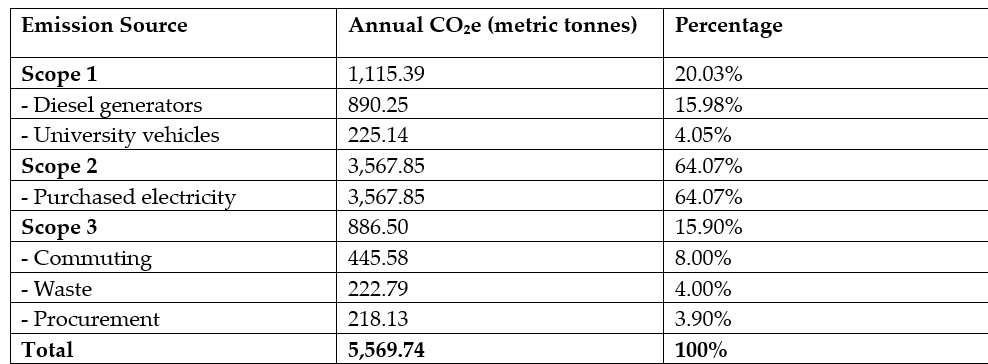
This report evaluates Prince Sattam Bin Abdulaziz University's (PSAU) carbon emissions in accordance with the GHG Protocol Corporate Standard, a globally recognised framework for quantifying greenhouse gas (GHG) emissions. It outlines the methodology, key emission sources, and actionable insights to support PSAU's sustainability objectives. The university's total annual carbon footprint is 5,569.74 metric tonnes of CO₂e, with emissions categorised across Scope 1 (direct), Scope 2 (indirect energy), and Scope 3 (other indirect).
Introduction
PSAU is committed to environmental stewardship and reducing its carbon impact. By adopting the GHG Protocol Corporate Standard, this report establishes a baseline for emissions tracking, enabling targeted strategies to align with Saudi Arabia's Vision 2030 sustainability goals and global climate action frameworks.
Methodology
The assessment followed these steps:
1. Scope Definition:
o Scope 1: Direct emissions from university-owned fuel combustion (generators, vehicles).
o Scope 2: Indirect emissions from purchased electricity.
o Scope 3: Indirect emissions from commuting, waste, and procurement.
2. Data Collection: Energy bills, transport logs, and waste records were analysed for FY 2022–2023.
3. Conversion Factors: Emissions were calculated using IPCC-recommended factors, adjusted for regional energy profiles.
4. Calculation: Activity data × emission factors = CO₂e (metric tonnes).
5. Reporting: Emissions aggregated by scope and source.
Carbon Emission Sources
Scope 1 (Direct Emissions): 1,115.39 metric tonnes (20.03%)
• Diesel generators for backup power.
• University fleet vehicles (petrol and diesel).
• Refrigerant leaks from HVAC systems.
Scope 2 (Indirect Energy): 3,567.85 metric tonnes (64.07%)
• Grid electricity consumption (primarily fossil-fuel based).
Scope 3 (Other Indirect): 886.50 metric tonnes (15.90%)
• Staff and student commuting (private vehicles).
• Waste generation (non-recycled materials).
• Procurement of lab chemicals, electronics, and paper products.
Key Findings
Recommendations
1. Energy Efficiency:
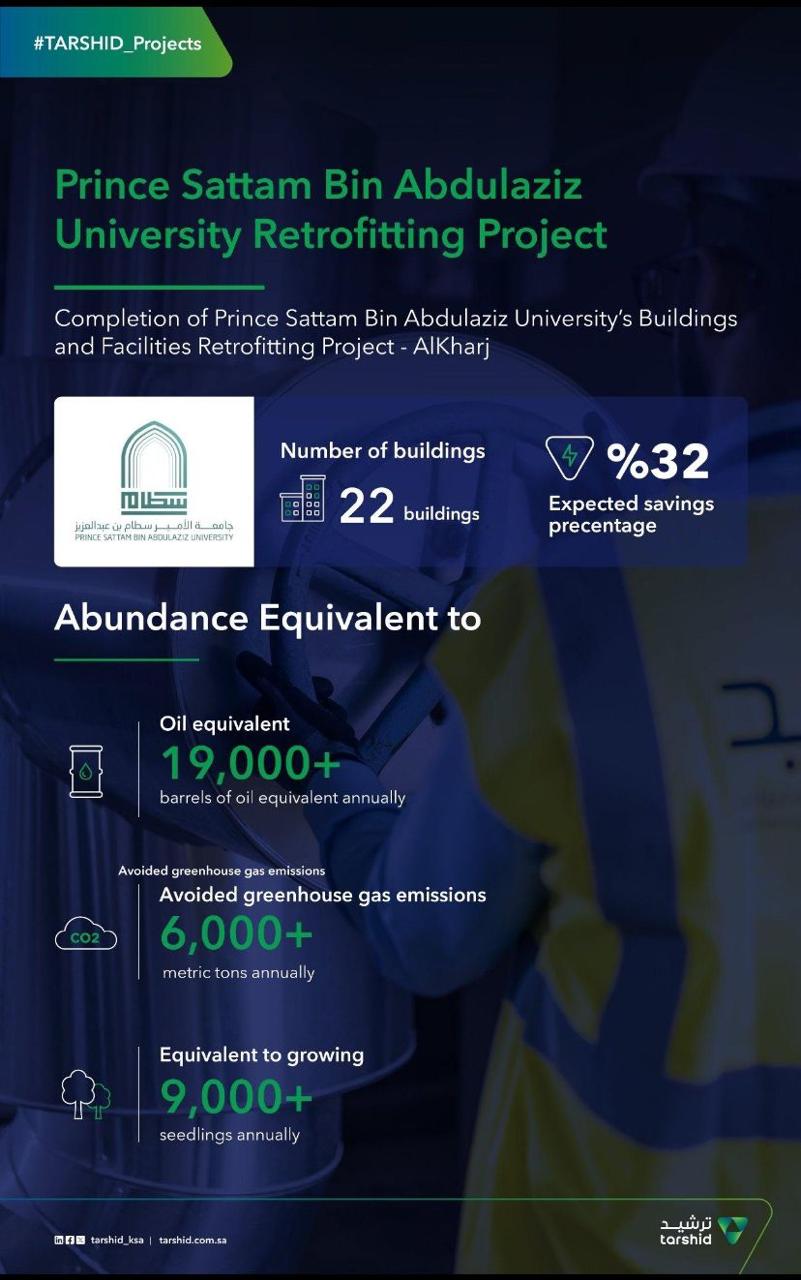
o Retrofit HVAC systems and install smart meters to reduce electricity demand.
o Transition to LED lighting campus-wide.
2. Renewable Energy Integration:
o Invest in on-campus solar photovoltaic systems to offset grid reliance.
o Explore partnerships with Saudi renewable energy initiatives.
3. Sustainable Transport:
o Expand shuttle services and incentivise carpooling.
o Install EV charging stations for university-owned vehicles.
4. Waste Management:
o Implement a zero-waste policy with enhanced recycling and composting programmes.
o Reduce single-use plastics in campus facilities.
5. Stakeholder Engagement:
o Launch sustainability workshops for staff and students.
o Integrate carbon literacy into curricula.
Conclusion
This report underscores PSAU's commitment to transparency and climate action. By prioritising energy efficiency, renewable adoption, and behavioural change, PSAU aims to align with Saudi Arabia's sustainability ambitions while fostering a culture of environmental responsibility. Annual updates will track progress toward a 30% emissions reduction by 2030.
PSAU's Collaborations in Measuring SDGs
PSAU's commitment to sustainability extends to its global engagement, as demonstrated by two flagship initiatives:
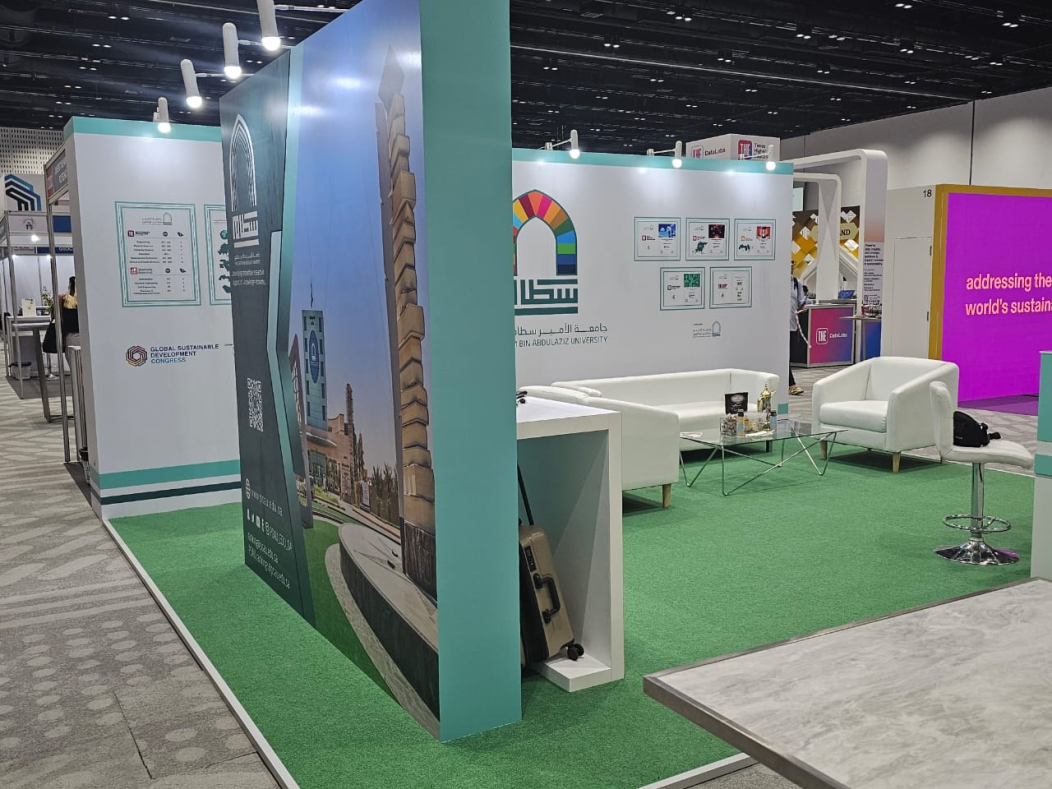
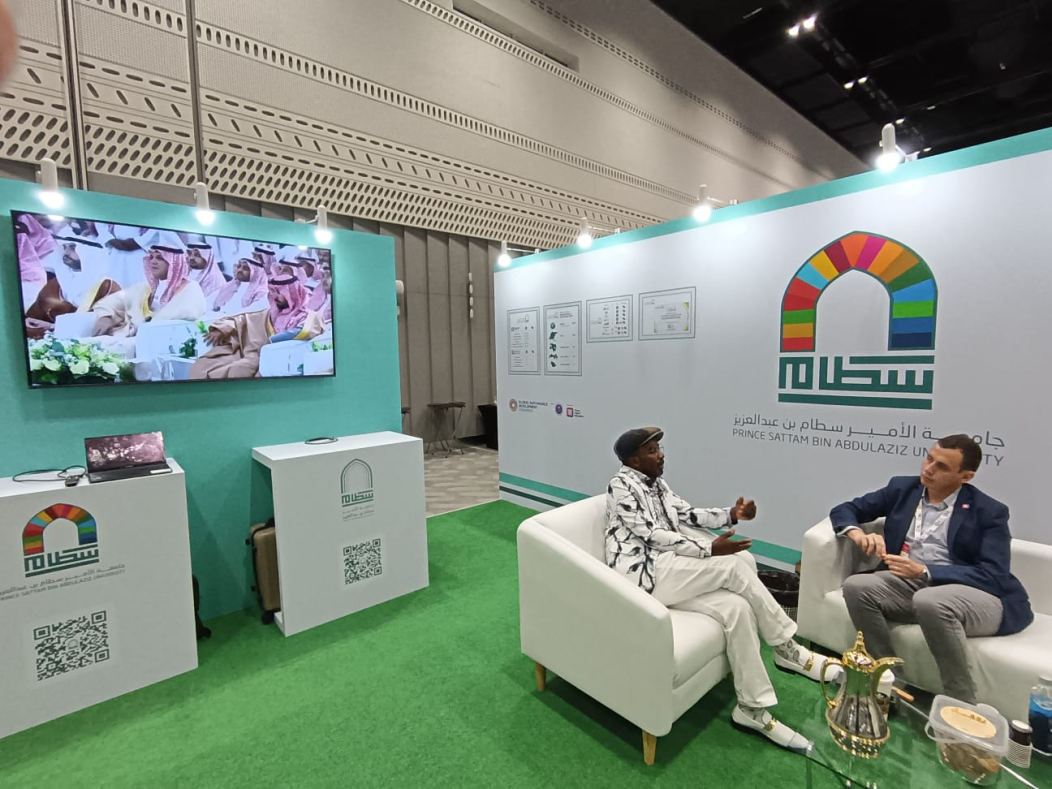
Sponsorship of the Times Higher Education (THE) Global Sustainable Development Congress (in Thuwal, Jeddah, Saudi Arabia (2023) and in Bangkok, Thailand (2024)).
As a sponsor of the THE Global Sustainable Development Congress, PSAU has facilitated knowledge exchange on a global scale, bringing together policymakers, academics, and industry leaders. Through these events:
• PSAU has showcased its research and policy initiatives, contributing to global SDG discourse.
• Facilitated discussions on key challenges like climate resilience, education equity, and sustainable energy, helping shape actionable strategies for governments and NGOs.
SDG Research to Measure SDGs
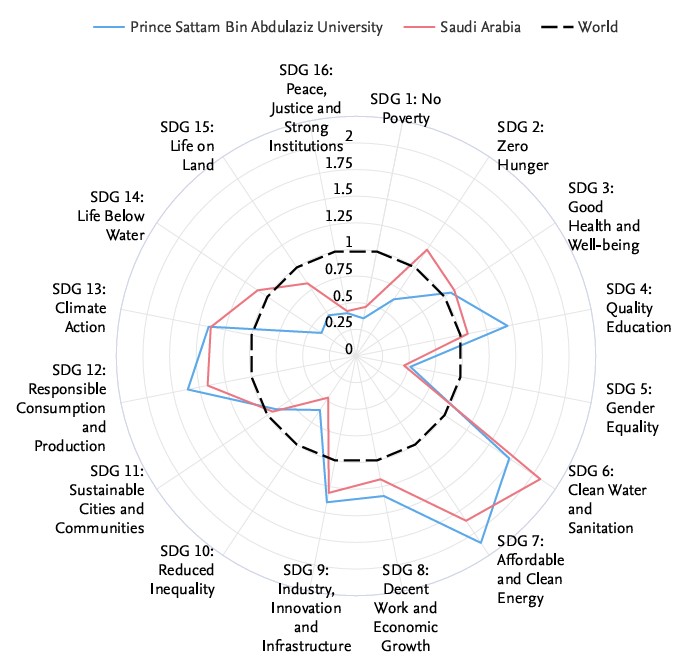
PSAU engages in research aimed at measuring and advancing the SDGs. These efforts include measurements of air quality, carbon emissions, recycling, etc. According to Elsevier's SciVal, today PSAU outperforms national and global peers in SDG research as presented in the snapshot below.

The PSAU GSP fosters collaboration with Global South institutions to address development challenges.
Key Contributions:
1. Collaborative Research:
o Projects on climate-resilient farming and renewable energy with African and Asian universities.
o SDG 13 (Climate Action), Target 13.1: Strengthening resilience and adaptive capacity.
2. Educational Initiatives:
o Two-way student and faculty exchanges focused on sustainability.
o SDG 4 (Quality Education), Target 4.4: Skills for employment and entrepreneurship.
3. Community Engagement:
o Support for marginalised communities via participatory projects.
o SDG 10 (Reduced Inequalities), Target 10.2: Empowering marginalised groups.
4. Policy Advocacy:
o Campaigns for ESG integration and sustainable urban development.
o SDG 11 (Sustainable Cities and Communities), Target 11.3: Inclusive urban planning.
PSAU's SDG Research Funding Program (SDG RFP) invests in high-impact research.
Notable Projects:
1. AI and Healthcare:
o AI Hackathon for predictive models in healthcare.
o SDG 3 (Good Health and Well-being), Target 3.8: Universal health coverage.
2. Digital Transformation:
o MoU with STC for IoT and AI research.
o SDG 9 (Industry, Innovation, and Infrastructure), Target 9.5: Enhancing scientific research capacity.
3. Smart Farming:
o Research on resilient agriculture techniques.
o SDG 2 (Zero Hunger), Target 2.4: Sustainable food production systems.
PSAU International Collaboration Research Programme
https://drgs.psau.edu.sa/en/content/2021-11-04
Introduction
A programme to finance joint research projects between a research team of faculty members or researchers at Prince Sattam bin Abdulaziz University and faculty members or researchers from distinguished universities or international research institutions in the field of scientific research.
Objectives
1. Develop scientific and technical research at Prince Sattam bin Abdulaziz University through research partnership with prestigious international research centres.
2. Develop the research capabilities and skills of faculty members and researchers through the exchange of experiences and knowledge with their counterparts from international universities.
3. Support the formation of research teams of faculty, researchers, and graduate students.
4. Encourage the exchange of scientific visits between Prince Sattam bin Abdul Aziz University and prestigious international universities.
5. Increase the rate of scientific publication of research outputs in international scientific journals with a high impact factor.
Duration
18 months from the date of issuance of the contract and may be granted an additional period not exceeding half of the duration of the project for completion, provided that the extension does not entail any additional financial dues.
Terms and conditions
1. The research proposal or part of it should not have been supported by any party outside or inside the university.
2. Priority of support for researchers who are not associated with research projects currently supported by the Deanship of Scientific Research or with previously failed projects.
3. The research team should be composed of no less than three researchers, in addition to the following conditions:
a. Two members of the research team should be faculty members at the university
b. Principal researcher should be from the university faculty.
c. The participation of assistants and advisors from outside the University is allowed
d. The participating researcher from outside the University must be a distinguished researcher
4.The comparison is made according to the research activity of the external participant researcher during the past three years, according to databases (WoS and Scopus).
5.The percentage of plagiarism in the research proposal should not exceed 25%
6. The principal investigator of the project must participate in all published research, and the participating researchers must participate in at least one research for each member.
7. The duration of the project should not exceed 18 months
8. The amount of funding should not exceed 100,000 riyals for projects in the humanities and administrative specialties and 150,000 riyals for projects in the scientific, engineering and health specialties.
9. The value of equipment should not be less than 30% of the research project budget
10. The remuneration of the members of the research team should not exceed 40% of the total value of the project funding.
11. All scientific papers related to this project must be published in scientific periodicals and journals with impact factors indexed in the Web of Science (ISI) for scientific, health and applied disciplines and in Scopus and Web of Science (ISI) for humanities disciplines.
12. For the research group to be terminated and the financial dues to be paid, the principal investigator must achieve twenty-seven points (scientific specialisations) and eighteen points (humanities) according to Table 1 below.
13. The research team should acknowledge the Deanship’s support as follows:
a. Research in Arabic:
"تم دعم هذا المشروع بواسطة عمادة البحث العلمي بجامعة الأمير سطام بن عبد العزيز من خلال المقترح البحثي رقم .................."
b. Research in English:
“This project was supported by the Deanship of Scientific Research at Prince Sattam bin Abdulaziz University under the research project #......”
14. If the research project results in patents, inventions, discoveries or products, the intellectual property shall belong to the University and the research team of from Prince Sattam bin Abdulaziz University.
Application procedure
The research proposal is submitted according to the scientific research system via the following link:
